Orion is designed to take as many as six astronauts into deep space for what duration of time?
Orion spacecraft: NASA's next-gen capsule to have astronauts across Earth orbit
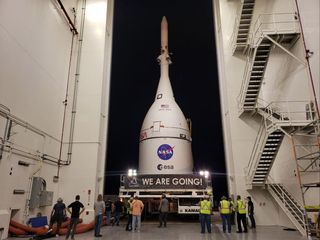
The Orion spacecraft (more formally, the Orion Multi-Purpose Crew Vehicle) is NASA'south vehicle of option to take astronauts to the moon, a future lunar infinite station and potentially, on to Mars.
The spacecraft has already passed i major flight in space in 2014 and is expected to take on a second journeying shortly with the Artemis 1 mission, expected to launch no before than May 2022. An orbital mission and a landing mission are then expected later in the 2020s.
Similar in shape to the Apollo spacecraft, Orion is designed to conduct up to iv astronauts to destinations such as the moon or Mars. Orion is a significant upgrade from Apollo — the spacecraft is newer and much larger than Apollo, and sports electronics decades more than advanced than what Apollo'south astronauts used to wing to the moon.
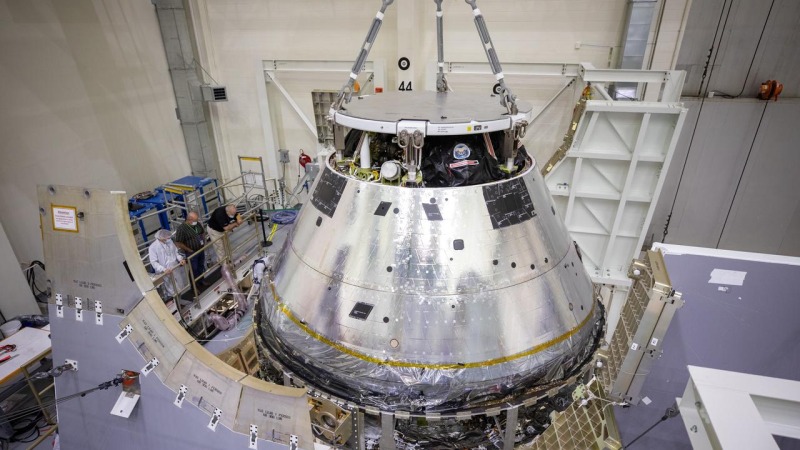
Orion spacecraft Fast facts
- Crew: 4
- Elevation: 50 feet/xv meters (including launch abort system)
- Diameter (base): 17 feet (five.ii meters)
- Maximum number of days in space: 21
- Mass (Artemis 2): 17,000 lbs (7,770 kg)
- Solar arrays: 4
Orion spacecraft development history
Lockheed Martin is the prime contractor for the spacecraft. The visitor began work on the spacecraft in 2004 during a competition for the contract, which was valued at upwardly to $8.15 billion when Lockheed Martin won it in Baronial 2006.
Orion was originally built for NASA'southward Constellation program that was intended to bring humans to the International Space Station, the moon and, ultimately, Mars. The programme was canceled in 2010 afterwards President Barack Obama's assistants requested that NASA focus on other goals.
At that point, NASA had already spent $5 billion on developing Orion and Lockheed had been working on the spacecraft for about six years. In early 2011, NASA hinted that the Orion spacecraft could exist repurposed for their new directive. The bureau followed upwards with a plan for the Multi-Purpose Crew Vehicle — one that was relatively close to the previous Orion spacecraft design, merely instead could be used for the new mandate.
"Nosotros made this option based on the progress that'south been made to engagement," Doug Cooke, associate ambassador for NASA's Exploration Systems Mission Advisers in Washington, D.C., said to reporters on May 24, 2011. "Information technology made the nearly sense to stick with [the Orion blueprint]." [The Orion Capsule: NASA'south Side by side Spaceship (Photos)]
Orion persisted through its development as NASA pivoted plan goals yet again, when U.South. President Donald Trump tasked the agency with prioritizing moon landings over deep infinite excursions for a planned 2024 landing. The plan, eventually known every bit Artemis, expects to put boots on the moon somewhat subsequently that deadline, which was non met due to numerous bug explained below.
The Joe Biden administration committed to continuing Artemis, afterwards coming to office in 2021. A next major stage in spacecraft development will be the Artemis 1 mission, which will run across how well Orion performs in a cislunar environment. That volition allow engineers to ready the spacecraft for man missions later in the 2020s.
Besides the flight tests, Orion has proceeded through many years of footing testing to ensure its readiness for space. Some recent milestones (afterward its get-go, successful spaceflight) include completing parachute testing in 2018, acing a key propulsion test in 2019, and performing splashdown "drib" testing in a pool in 2021 to fix for the first humans aboard Artemis ii.
Orion spacecraft blueprint and interior
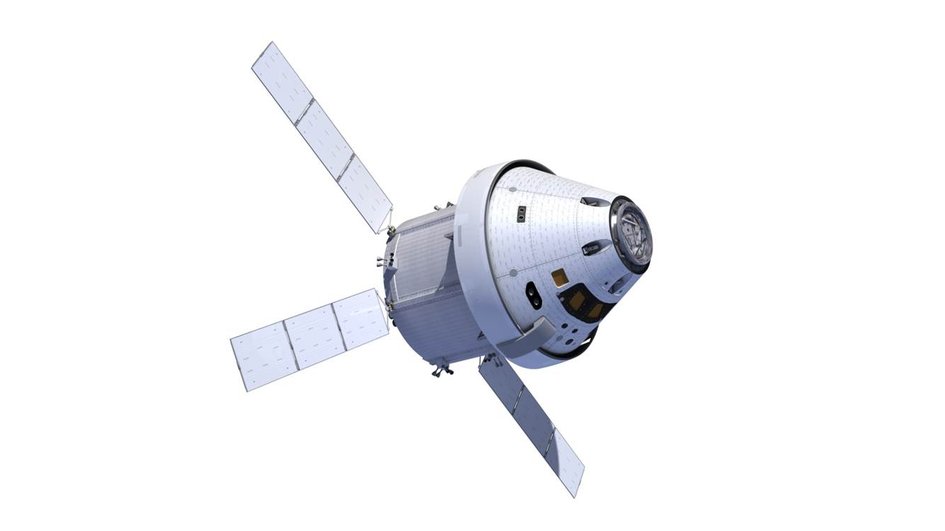
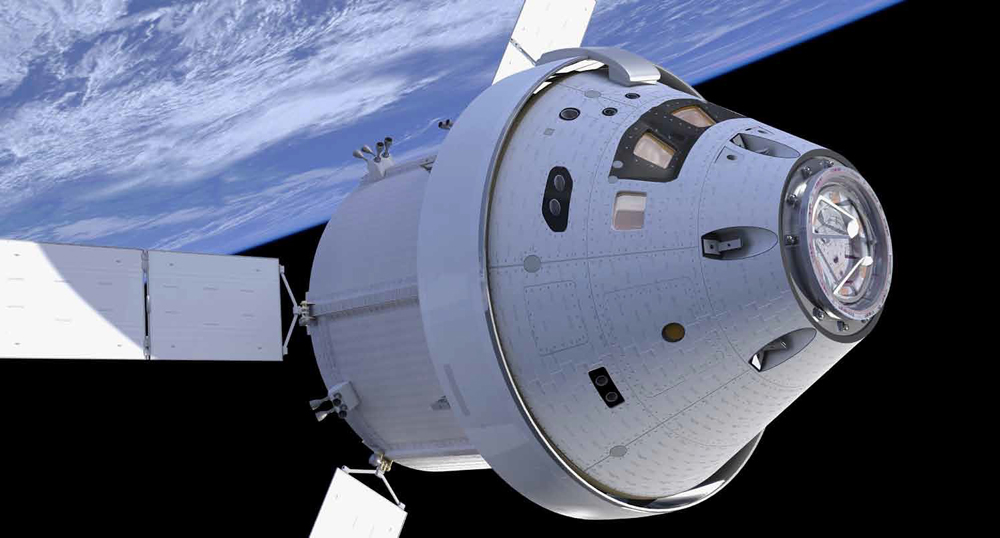
The Orion spacecraft consists of a gumdrop-shaped capsule and service module, which together are almost 26 feet (8 meters) long with a diameter of 16.5 feet (5 chiliad). The spacecraft's habitable volume is 316 cubic feet (8.95 cubic meters), which is virtually 1.5 times larger than the Apollo spacecraft.
Orion's crew module is simply i of several components of the spacecraft. Orion as well contains a launch- abort organization to pull astronauts away from the spacecraft with escape rockets should something go wrong during launch.
The service module, congenital by the European Infinite Bureau, contains solar panels for electricity, oxygen for breathing and rocket engines to propel the spacecraft. Orion also includes a spacecraft adapter (which shields the service module during launch) and an instrument unit that includes the guidance and control system for the booster. [Infographic: Orion Explained: NASA'southward Multi-Purpose Crew Vehicle]
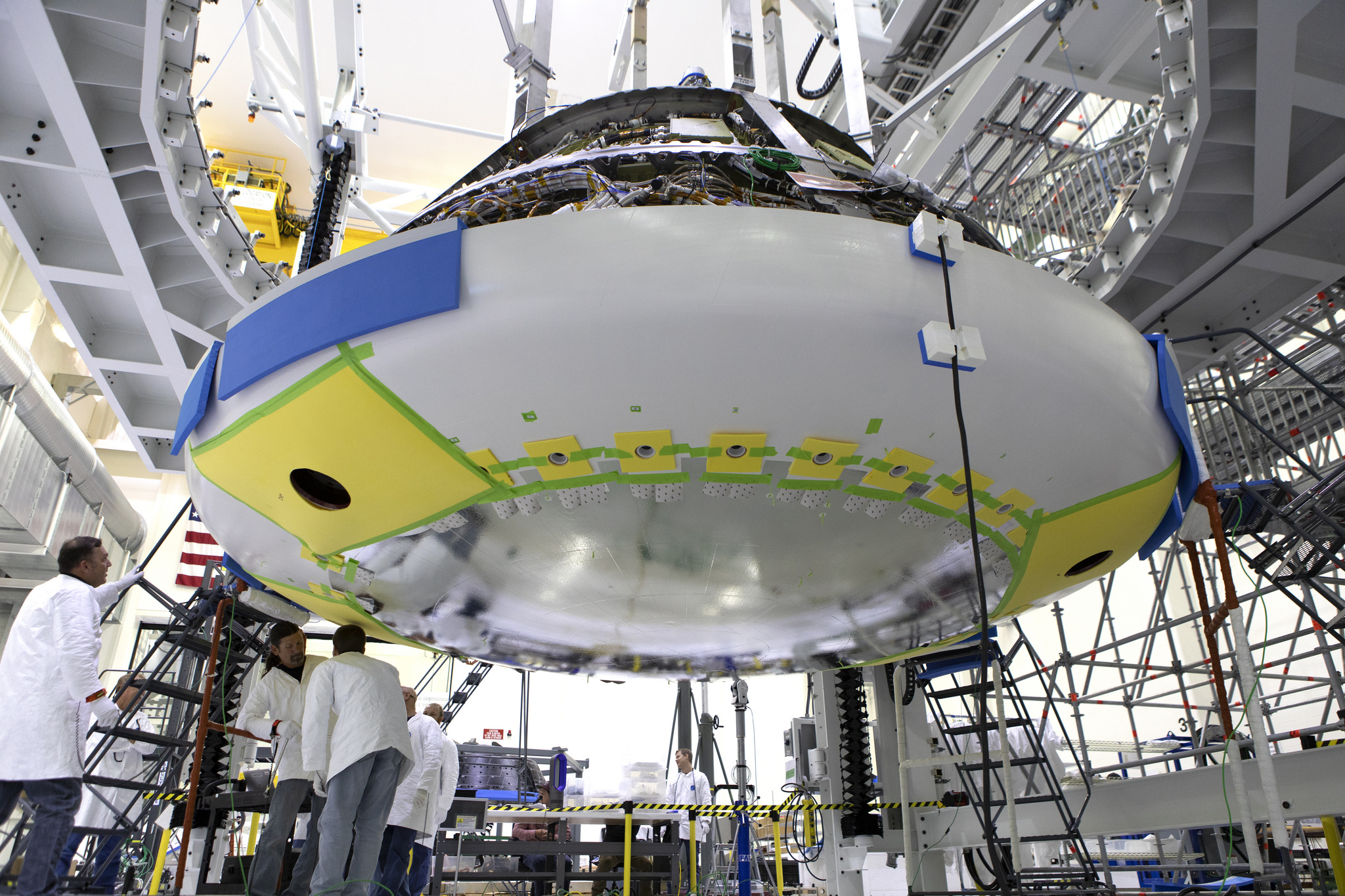
Orion'southward interior will include a sleek ready of screens for astronauts to keep an eye on key systems and mission progress, in consultation with Mission Control at NASA's Johnson Space Center in Houston.
"Because astronauts of different sizes will exist sent to the Moon in Orion, the display panels and chairs need to work for 99 percent of people," NASA wrote. "That means making the bottom panels of the seats adaptable, and arranging panels and so that the smallest or largest of astronauts can accomplish all the controls."
Window shades tin be deployed on the windows to cake out sunlight, and sleeping bags will allow astronauts to comfortably strap themselves to a spot in the spacecraft for weightless slumber.
NASA is pulling from decades of research on the International Space Station, the shuttle and earlier programs to keep the astronauts safe and comfy. For case, acoustics specialists were consulted to make sure equipment was humming at a comfortable level, and emergency equipment is stored inside easy reach in case a fire or sudden depressurization occurs.

Orion spacecraft'southward Exploration Flight Test-i
The start space mission of Orion was Exploration Flying Exam-ane, likewise known as EFT-1. That saw Orion undergo a space test for 4.five hours, soaring equally high as 3,600 miles (five,800 km) for two orbits of World.
The spacecraft was fitted with almost 1,200 sensors to record essential data to inform future pattern, such as stresses, temperature, pressure, acceleration and vibration. It also came with ultrawide field cameras to record flight events in high definition.
Since SLS was still under construction, Orion rode to infinite aboard a United Launch Brotherhood Delta Iv Heavy booster. The rocket was however powerful plenty to push Orion further into space than any humans had been since 1972, when Apollo 17 fabricated a moon landing.
Orion also experienced the inner Van Allen Belt, a zone of radiation trapped by the World's magnetic field. Surviving the radiations hither was central for the protection of future astronauts, who will demand to pass through this zone to brand information technology to the moon.
Orion program pin
Shortly later on EFT-ane splashed downward, NASA said the flight had been a success. The major systems worked well; too, roughly 55 percentage of the capsule'due south technology that is deemed essential for crewed missions passed muster during the flight. The bureau was hoping to fly a second exam of Orion as soon every bit 2018, on board SLS.
Just numerous challenges arose in getting fix for Artemis 1. For example, NASA was tasked with irresolute plan approaches as the Donald Trump presidency reached office. Orion was originally imagined to bring astronauts to multiple destinations in deep space, but Trump directed NASA to pivot to a moon landing to every bit soon as 2024, necessitating that the spacecraft be repurposed for lunar work.
Additionally, SLS evolution barbarous behind schedule due to multiple bug. The eruption of the coronavirus pandemic in 2020 created supply chain problems and concrete distancing necessities, both of which slowed downwards manufacturing and testing.
SLS too had several technical issues in completing a "greenish run" series of testing, and so had to overcome problems found with the core engines. Issues similar these pushed the debut appointment of SLS to 2022, inducing an eight-year gap between Orion's starting time and 2nd test flights.
Orion spacecraft and Artemis 1
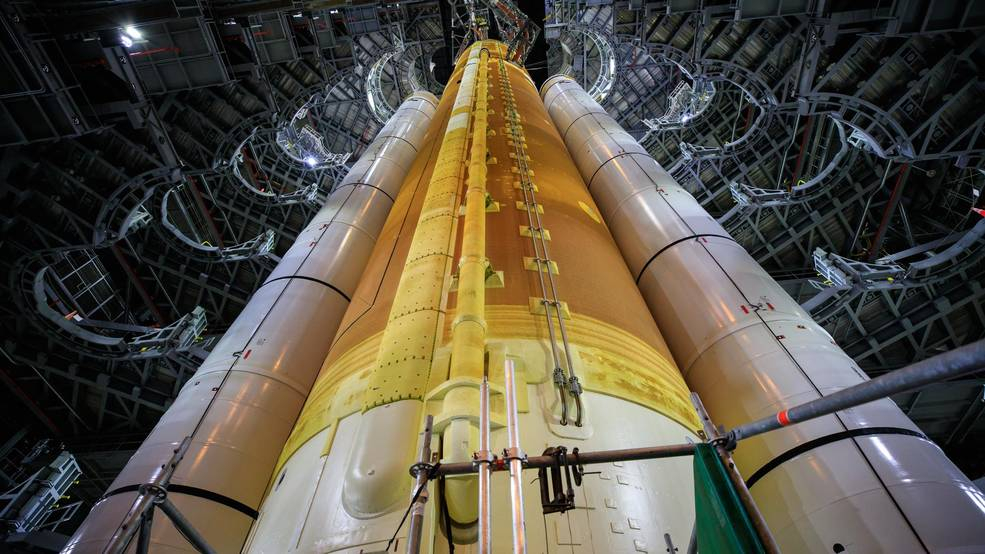
Equally of this writing, Artemis 1 is expected to start its mission no earlier than May 2022. It will be the starting time mission of NASA's SLS in partnership with the Orion spacecraft, which will be on its 2nd programme mission.
Orion will take a much further journeying this fourth dimension effectually, even so, going on a a 236,000-mile-long (380,000-kilometre-long) journey to the moon. According to NASA, "Orion will stay in space longer than whatever ship for astronauts has done without docking to a infinite station, and return home faster and hotter than ever earlier."
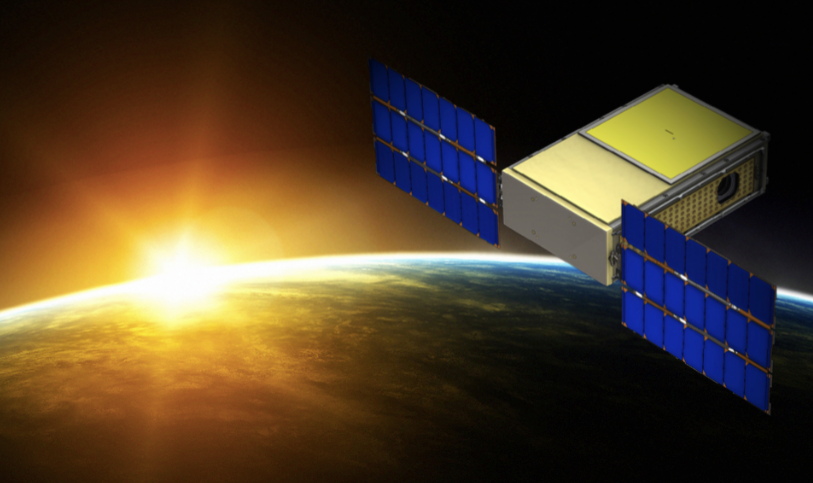
I of the mission's first jobs, upon leaving Earth orbit, will be to eject several tiny satellite hitchhikers. An example is BioSentinel, which comport yeast samples into deep space to study how radiation affects living organisms. The applications volition exist carried forrard to Artemis 2 and other missions with humans.
Every bit Orion swoops around the moon, information technology will be accompanied by several mannequin-type devices to give even more than information on how the lunar surroundings affects humans.
"Commander Moonikin Campos," named after Apollo xiii engineer Arturo Campos in a NASA contest, will fly in the commander'southward seat wearing the aforementioned Orion Crew Survival System spacesuit that astronauts will don later in the program. As well on Campos volition be radiation sensors and instrumentation for vibration and dispatch data.
Two simulated female astronauts will wing on other Orion seats, from the German space bureau (DLR). One of them, Zohar, is wearing a a radiation-shielding belong called StemRad while the other, Helga, volition serve as a control with no such protection.
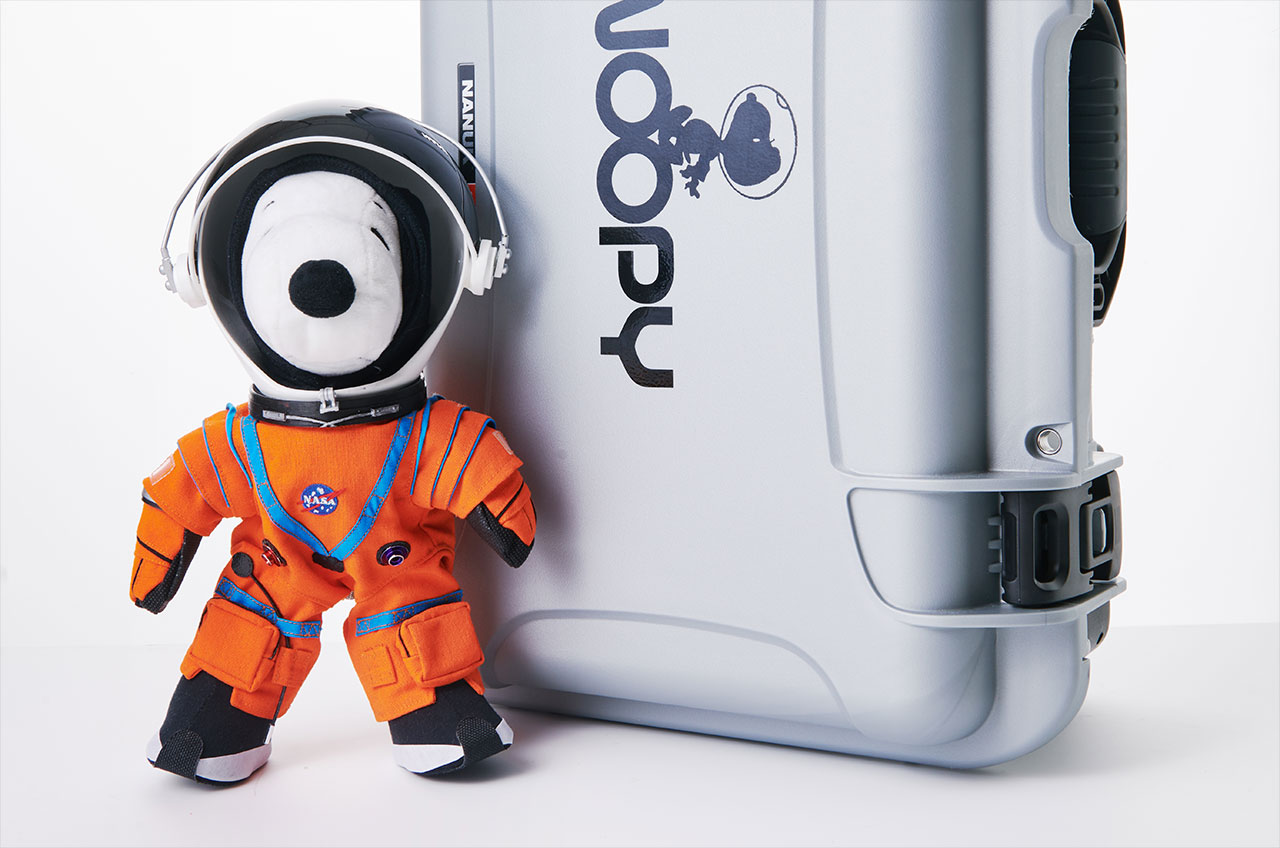
The mission will include several Lego astronauts and even Snoopy, the famous "Peanuts" domestic dog who also served as a moniker for Apollo 10 lunar spacecraft that approached the surface of the moon. This fourth dimension around, he will be a "nada-gravity indicator" and will wear the Orion spacesuit in miniature.
Orion volition remain in a retrograde orbit for between half-dozen and nineteen days before getting a gravity help from a return towards the moon. The assist will help Orion wing back to Globe, on a journeying that should take another nine to 19 days.
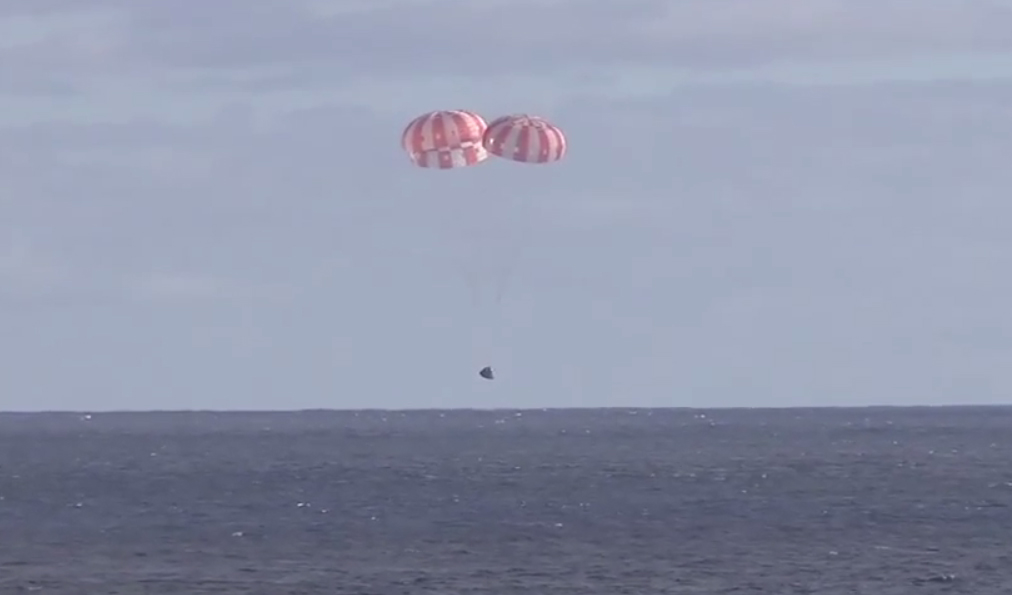
Finally, Orion volition make a high-speed re-entry like to what was tested during Orion's first exam flight in 2014, when the spacecraft got as high as 3,600 miles (v,800 kilometers) above World. It will descend for an ocean splashdown under parachutes, and the data will later be analyzed to go ready for man missions.
Orion, Artemis 2 and Gateway
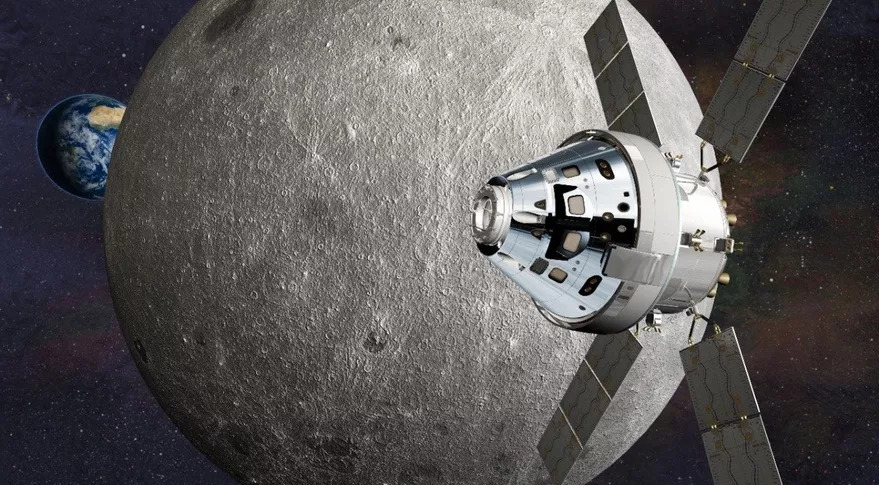
Assuming that Artemis 1 is completed with no major issues, Artemis two will be the side by side major moon mission. Artemis 2 is expected to launch around May 2024 (compared with a previous goal of September 2023, induced by delays to Artemis one.)
The mission volition run into a group of astronauts ride effectually the moon in the Orion spacecraft. NASA ambassador Bill Nelson told reporters in 2021 that Artemis two will travel "further than humans have ever been, probably twoscore,000 miles [about 64,000 kilometers] beyond the moon," before returning to Earth.
The crew for Artemis two has non yet been named. NASA has a set of astronauts prequalified for Artemis missions, known as the "Artemis team." The group includes women and several non-white astronauts, which will distinguish the Artemis programme from its predecessor, Apollo, that saw 12 white men land on the moon.
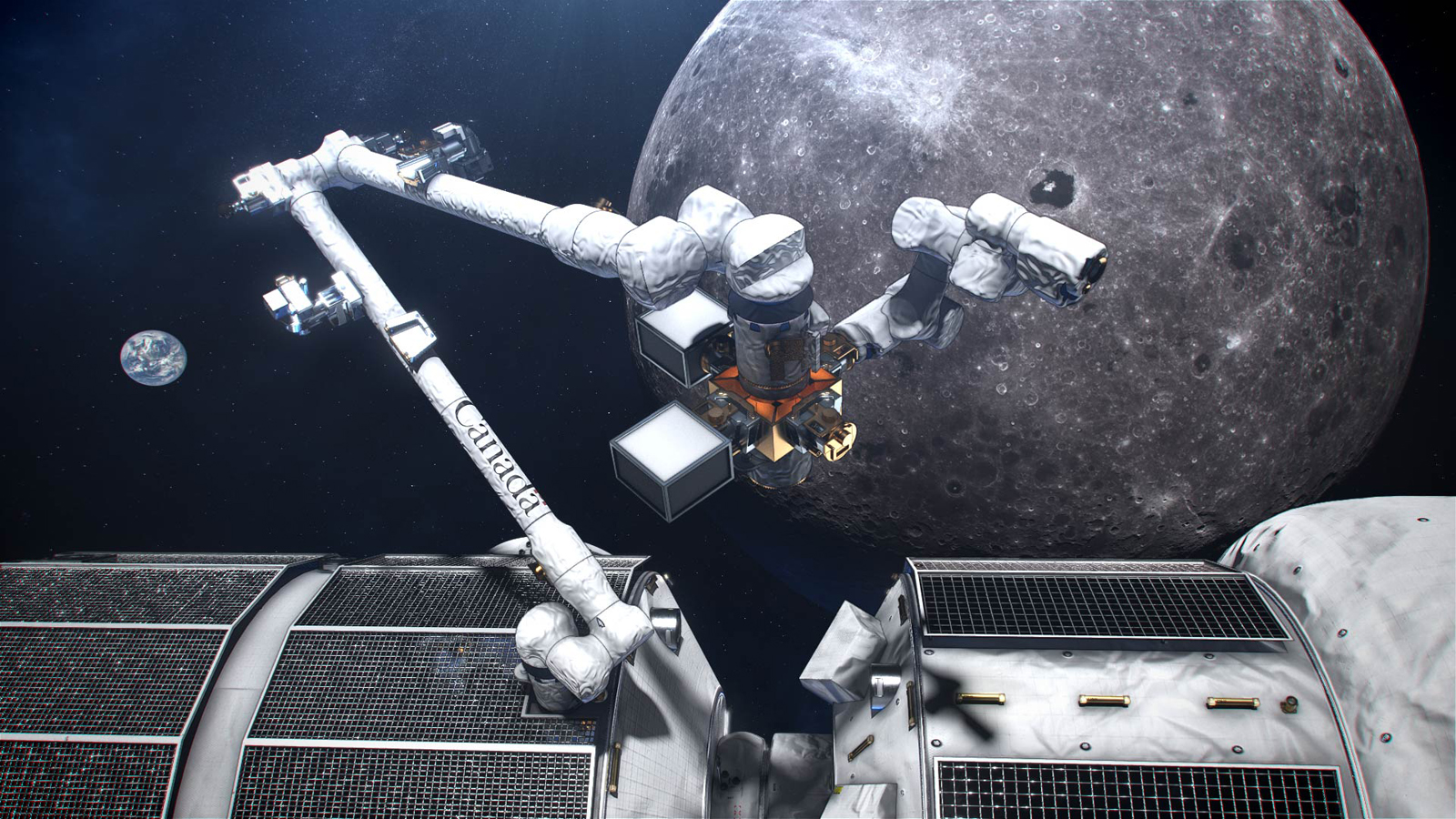
Also on the team will be a so-far unnamed Canadian Infinite Bureau astronaut, every bit a thank-you lot for the country's contribution of Canadarm3. This robotic arm volition go along a series of Canadarms that were agile during the space shuttle and now, the International Space Station era. Canadarm3 will take artificial intelligence embedded in its software to practise repairs and maintenance.
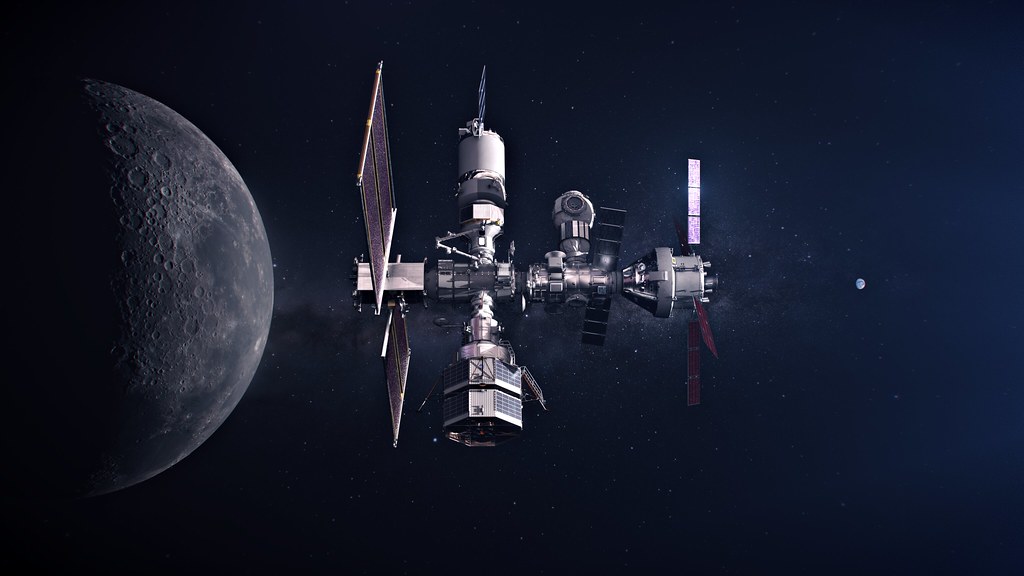
The arm will fly aboard a planned space station NASA plans to put near the moon, called Gateway. It will host crews for between one and three months to exercise science, to assist with landing missions and to test out applied science such as telerobotics.
Gateway's orbit will exist a "about rectilinear halo orbit" (NRHO). It volition range between 1,860 miles and 43,500 miles (three,000 and 70,000 kilometers) from the surface of the moon, co-ordinate to the European Infinite Bureau (opens in new tab) This volition let Gateway to feel a minimum of eclipses for consequent solar power.
Orion and Artemis 3
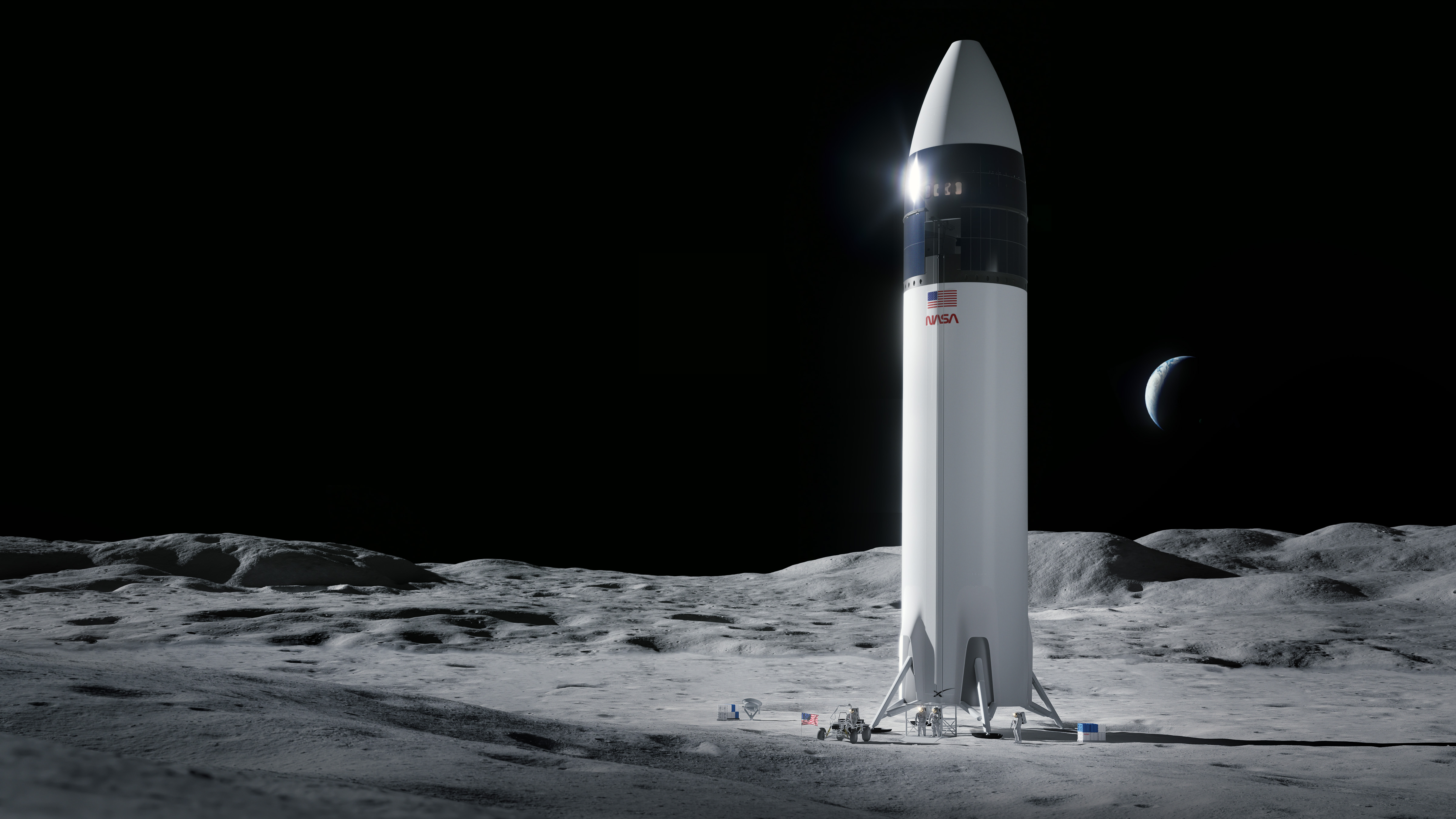
Artemis 3 will see a crew of astronauts, including the commencement adult female and potentially the get-go person of colour, debark on the moon's surface. The coiffure is expected to touch downward somewhere in the south pole, which is a region unexplored by people or missions to appointment. Simply it is a potentially valuable zone, total of volatiles such every bit water that could be harvested for mining or astronaut needs.
NASA's Commercial Lunar Payload Services plan, which seeks to send a prepare of private landers and experiments to the moon, plans to explore the region in more item in the coming years. For example, NASA's Polar Resources Water ice-Mining Experiment-one (Prime-1) is expected to land at Shackleton Crater aboard an Intuitive Machines Nova-C lander.
NASA will use what it learned from Prime-1 to prepare for a more aggressive lunar rover mission, the Volatiles Investigating Polar Exploration Rover (VIPER). This mission, targeted for a 2023 landing, is expected to bear on down just westward of Nobile, a crater near the moon'southward south pole.

The moon landing for Artemis 3 is expected no earlier than 2025, although NASA's Office of the Inspector General has repeatedly expressed cynicism most that borderline and at present says it will be at to the lowest degree 2026. For one thing, engineering science and logistics problems have already pushed back Artemis one. Other things are making the timeline for Artemis 3 fuzzy, too.
The agency's development of side by side-generation spacesuits, chosen the Exploration Extravehicular Mobility Unit of measurement (xEMU), is facing delays. Monetary concerns and a 20-month filibuster in designing, verifying and testing the suits are amid the bug cited. NASA also decided to pivot much of the piece of work to a contractor to save costs, only which is expected to add together fourth dimension to the process.
Another worry is the Human Landing System (HLS) that is supposed to exist readied by SpaceX. The program was delayed 7 months in 2021 due to protests and a lawsuit by Blue Origin terminal year (all resolved by Nov) apropos NASA's sole-source award.
The Artemis program's ballooning cost is also at issue. The first iv Artemis missions are expected to cost $four.1 billion each, according to a November 2021 OIG inspect (opens in new tab).
References
"Artemis." NASA. (northward.d.) https://world wide web.nasa.gov/specials/artemis/ (opens in new tab).
"NASA's Management of the Artemis Missions: Report No. IG-22-003." NASA Role of the Inspector General. (2021, Nov. 15). https://oig.nasa.gov/docs/IG-22-003.pdf (opens in new tab).
"Orion." Lockheed Martin. (2022.) https://world wide web.lockheedmartin.com/en-us/products/orion.html (opens in new tab).
"Orion Quickfacts." NASA Johnson Infinite Centre. (n.d.) https://world wide web.nasa.gov/sites/default/files/fs-2014-08-004-jsc-orion_quickfacts-web.pdf (opens in new tab).
"Orion Spacecraft." NASA. (2021, July nine). https://world wide web.nasa.gov/exploration/systems/orion/index.html (opens in new tab)
Join our Infinite Forums to keep talking space on the latest missions, night sky and more! And if you accept a news tip, correction or comment, let us know at: customs@space.com.

Elizabeth Howell, Ph.D., is a contributing writer for Space.com (opens in new tab) since 2012. As a proud Trekkie and Canadian, she tackles topics like spaceflight, diversity, science fiction, astronomy and gaming to help others explore the universe. Elizabeth'south on-site reporting includes two human spaceflight launches from Kazakhstan, and embedded reporting from a imitation Mars mission in Utah. She holds a Ph.D. and 1000.Sc (opens in new tab). in Infinite Studies from the University of Northward Dakota, and a Available of Journalism from Canada's Carleton University. Her latest book, NASA Leadership Moments, is co-written with astronaut Dave Williams. Elizabeth first got interested in space after watching the movie Apollo xiii in 1996, and still wants to exist an astronaut someday.
Source: https://www.space.com/27824-orion-spacecraft.html

Post a Comment for "Orion is designed to take as many as six astronauts into deep space for what duration of time?"