Why Can the Wolf Be Considered Both a Seconday Consumer and a Tertiary Consumer?
Whatever living thing that needs to eat food is a consumer. All animals are consumers. So are many microscopic creatures.
Many consumers consume plants or parts of plants. They are called primary consumers. They are besides known equally herbivores. Animals such as cows, horses, elephants, deer, and rabbits are grazers. They eat grass and the leaves from bushes and trees.
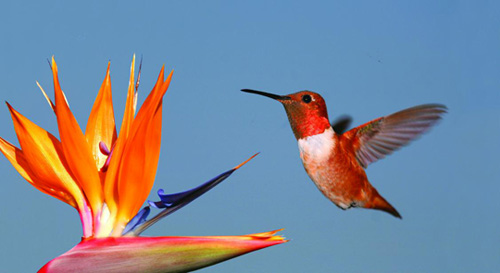 Hummingbirds demand lots of energy to keep themselves alive. Sugary nectar is a high-energy food that keeps them going.
OCEAN HERBIVORES
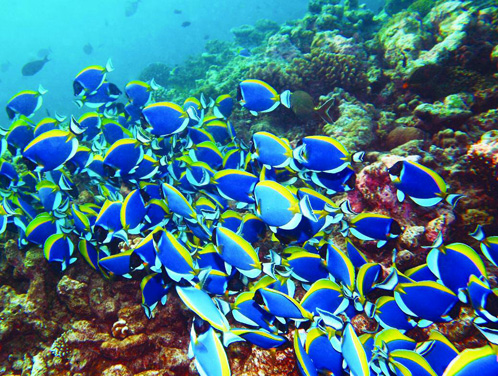 The bounding main has many herbivores. Many of these primary consumers feed on phytoplankton. One group is zooplankton. Zooplankton are animal plankton. Other herbivores include modest fish, squid, body of water urchins, and krill. The shrimplike krill are found in the cold oceans. And sea urchins, as you know, feed on coral reefs and kelp.
Other animals eat seeds and fruit. Among these are squirrels, bats, sparrows, finches, and parrots. Hummingbirds, collywobbles, and bees consume the nectar from flowers. Soil animals, such as grubs and worms eat establish roots. All these animals are primary consumers.
Secondary Consumers
Next come the secondary consumers. These animals eat primary consumers. Some of these are big predators such as lions, wolves, crocodiles, and eagles. They may eat animals bigger than they are. Some lions, for example, impale and eat water buffalo. The buffalo counterbalance twice as much every bit the lions exercise.
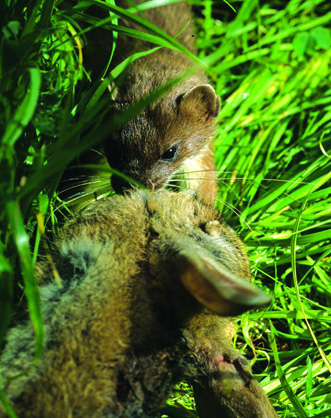 Weasels catch very large casualty. They are deadly killers. A single bite to the back of a rabbit's neck kills it at once.
FIERCEST PREDATOR?
Which fauna is the fiercest predator? Yous could measure the fierceness of a predator by the size of its prey. Then weasels would peak the list. Weasels frequently hunt rabbits. Rabbits can weigh nearly 10 times every bit much as the weasel.
Other secondary consumers swallow animals smaller than they are. Shrews, moles, birds, and most lizards eat insects. Some larger animals also eat insects. Anteaters and dominicus bears are 2 examples. These animals have to consume many insects. An anteater, for example, may eat equally many as 30,000 insects every 24-hour interval.
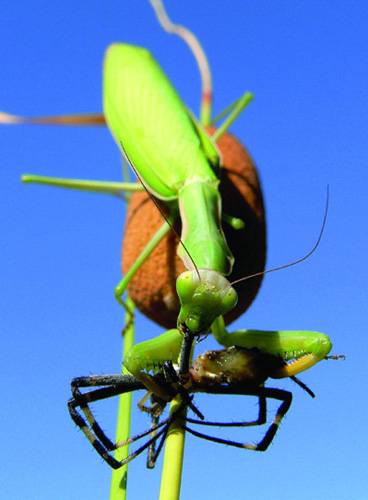 Mantises are also fierce predators. They eat all kinds of pocket-sized creatures, including spiders, like this 1.
3rd Consumers
Some animals are called tertiary consumers. This means they eat secondary consumers. Tertiary consumers are often the "top predators" in a food concatenation. This means that no other animals eat them.
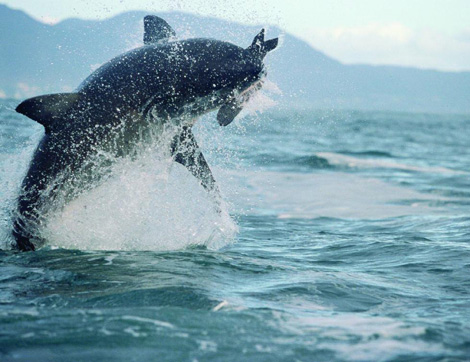 A great white shark leaps out of the water, catching a seal in its jaws. A shark is a tertiary consumer.
An area has only a few superlative predators. To run into why, remember about the energy pyramid. (See page x). It has many plants at the lesser. But only some of the energy from those plants gets turned into new animals. This means in that location will be fewer primary consumers. And there will be even fewer secondary and third consumers.
LONG Nutrient CHAINS
In the body of water, food chains can exist long. They may have a stage beyond tertiary consumers. For example, found plankton is eaten past animal plankton. These creatures are then eaten by pocket-sized fish. The small fish are eaten past a big fish. The big fish could then be eaten by a shark or a whale.
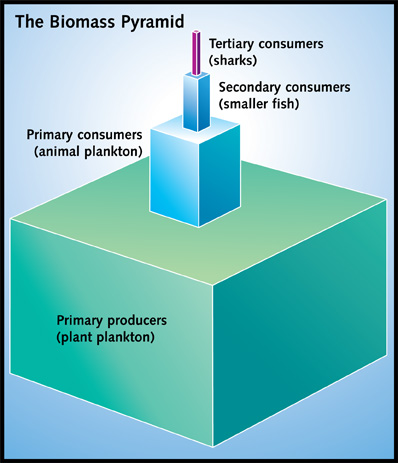 This biomass pyramid is very similar to the free energy pyramid on page 10. A habitat can support many more than plants than main or secondary consumers.
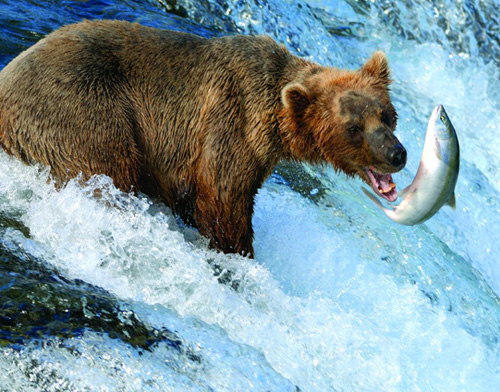 Bears, like this grizzly, savour catching salmon or other fish. However, they as well swallow plant nutrient such as fruit and dear.
Omnivores
Near humans are not but primary consumers or just secondary consumers. We eat both plant food and beast food. We are omnivores.
Other animals are omnivores, also. Foxes, for instance, eat other animals. But they also swallow fruit. Bears, raccoons, seagulls, and cockroaches are also omnivores.
Some omnivores are scavengers. This means they swallow food that other animals have left. Hyenas, for instance, consume the remains of animals that take been killed by predators. They have stiff jaws and teeth. With them, they can crunch through basic.
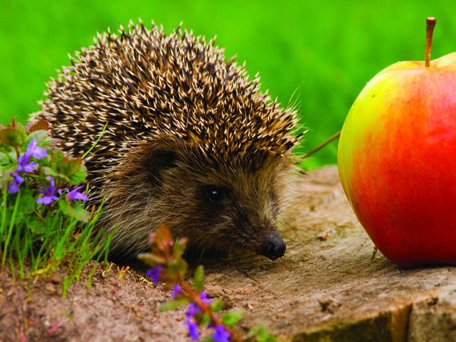 Hedgehogs consume mainly slugs, snails, beetles, and worms, but they likewise eat fruit.
PARASITES
Parasites are animals or plants that live on or inside other animals or plants. They are consumers. The mistletoe plant is a parasite. It lives on other plants. Roundworms are also constitute parasites. Fleas and tapeworms are also parasites. They sometimes feed on humans.
Source: https://science.jrank.org/kids/pages/61/CONSUMERS.html

Post a Comment for "Why Can the Wolf Be Considered Both a Seconday Consumer and a Tertiary Consumer?"